One of the best ways we've found to keep our grocery bill under control is to not buy pre-packaged gluten-free products. Make your meals from scratch if you can, and this will most likely ensure less cross-contamination too. I will say I've had trouble finding a bread recipe that I like enough to make at home regularly! (Anyone out there have a great g-free bread recipe that's soft and airy that you can't taste the xathan gum in?) So for now I'm buying $5-a-loaf bread. It clearly it would be less expensive to make my own... but I have to say, I'm so thankful for Udi's bread! :) I love the stuff!
Another way we've cut costs is to buy in bulk. We've recently begun purchasing things we use on a regular basis in bulk (like 50 lbs. at a time!)
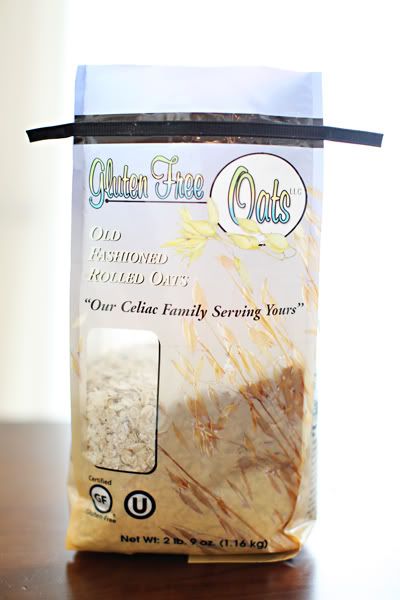
Last week we ordered Gluten Free Oats (wonderful family company! You should read their story on their site!) and Organic Almond Flour.

Not only can we cook the oats for oatmeal, but we can throw some in our blender to make oat flour. I debated buying raw almonds that I could blanch myself and then make flour from (which I will probably still do), but the almond flour arrived in a week and it was almost less than $1 lb. difference to have someone do all the work for me to make the flour and ship it to my front door, so for ease of life's sake right now, that's the route I took! :) Other things to buy in bulk would be brown rice pastas, rice, quinoa, etc.
We bought a small freezer for our garage a couple years ago, which has been great for storing a lot of ingredients. We buy 1/4 of an organic cow each year, raised on a farm in Albany, Oregon and then butchered and packaged for us. We know what the cow has been fed and how it was raised, etc. I also pick organic berries each year and put those in the freezer too. They are great to have on hand for smoothies, muffins, scones, pancakes, etc. And just in the past 2 months I've begun making my own broths too and freezing them in 2 cup jars, which has come in so handy anytime I want to make a soup or rice (which we make often).
Other things we've been doing lately to cut food budget costs are making large pots of soup (like split pea or minestrone) and putting the extra soup in smaller jars with the white easy screw top lids and putting them in the freezer. Josh takes these to work with him for lunches on a regular basis.


Hi Bethany,
ReplyDeleteI have been following your photography blog for awhile. I am a friend of Kate Murray, who is the sister-in-law of Julie Fulton who I think you know? Anyway- I came across your blog awhile back and fell in love with your photography work. You are fantastic! I love photography and am always trying to learn more so I enjoy reading your info. Anyway, the reason I am writing is because I was reading about how you purchase part of a cow and enjoy organic meat year round. I was wondering if you had any info on a place where I could look into doing this? I would be really interested in it. If you have the time to respond, I would really appreciate it.
Thanks so much!
Prita McKenna
I would be really interested to know where to start with going g-free. It's too hard to "substitute" everything we normally eat into gluten free (and expensive!) but I'm not sure how to adjust our diet in a normal way...I'm not sure if that makes sense. Like what did your first grocery list look like? I have a 10 month old and a 2 year old and a husband who could care less about what he eats :)...it's hard to cook to satisfy all of us! I know these are kind of loaded questions, but tips on beginning to go g-free would be great! This blog is already super helpful!
ReplyDelete